
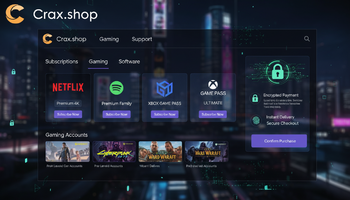
➡ Crax.shop Premium Accounts Marketplace ⬅
This article provides a comprehensive and structured overview of how premium accounts are accessed through online marketplaces. It explores the underlying system architecture, operational workflows, distribution models, and key considerations for users navigating this ecosystem. The objective is to present a neutral, technical perspective that aligns with current digital infrastructure trends in 2026.
Evolution of Premium Account Distribution
Digital marketplaces for premium accounts have evolved into organized platforms that aggregate access to multiple services under a unified interface. These platforms typically function as intermediaries, connecting service providers or account distributors with end users through structured listing systems.
From a technical standpoint, these systems rely on categorized databases that index services based on parameters such as platform type, subscription tier, duration, and access model. This structured approach allows users to efficiently locate and select relevant digital services.
System Architecture and Operational Model
Modern premium account marketplaces are built on scalable, modular architectures. At a high level, the system consists of:- A user interface for browsing and purchasing
- A backend processing layer for order management
- A credential delivery system
- A transaction validation and logging module
Account Access Models
Premium accounts distributed through such platforms typically follow one of several models:- Shared Access Model: Multiple users access a single subscription through controlled usage environments
- Private Account Model: Individual access credentials are assigned to a single user
- Automated Provisioning Model: Accounts are generated or allocated dynamically upon purchase
Security and Risk Management
Security plays a critical role in the design and operation of these platforms. Since account credentials and digital access rights are involved, systems must implement robust safeguards, including:- Encrypted data transmission
- Secure credential storage mechanisms
- Session monitoring and anomaly detection
- Rate limiting and access control systems
Data Flow and Delivery Mechanism
The data flow within premium account marketplaces follows a structured pipeline. After a user selects a service, the system validates the request, processes the transaction, and triggers a delivery mechanism.
Delivery may occur through:
- User dashboards
- Automated email systems
- Secure in-platform messaging
Performance and Scalability
To handle increasing demand, platforms implement performance optimization strategies such as:- Load-balanced server environments
- Caching mechanisms to reduce redundant processing
- Distributed microservices architecture
Compliance and Industry Context
As digital services expand globally, regulatory frameworks continue to evolve. While premium account marketplaces primarily focus on access distribution, they may operate within broader compliance ecosystems depending on jurisdiction.Structured logging, audit trails, and transparent transaction records support operational accountability and system traceability.
Practical Considerations for Users
Users interacting with such platforms should understand the underlying access model, service limitations, and operational structure. Awareness of how accounts are provisioned and managed helps ensure compatibility with individual usage requirements.FAQ
1. What are premium accounts?Premium accounts provide access to paid features of digital services such as streaming platforms, software tools, or online memberships.
2. How do online marketplaces distribute these accounts?
They use structured systems that allocate access credentials or shared subscriptions through automated delivery processes.
3. Are these platforms scalable?
Yes. Most platforms use cloud-based infrastructure and modular systems to handle large volumes of users and transactions.
4. What should users consider before using such services?
Users should review platform structure, access models, and usage guidelines to ensure compatibility with their needs.
5. Do these services involve direct ownership of accounts?
Not always. Access may be shared or provisioned depending on the system design.

