
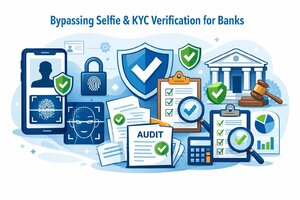
Banks and financial institutions rely on Know Your Customer procedures to protect users, prevent fraud, and meet regulatory obligations. Searches for topics like Bypassing Selfie & KYC Verification for Banks have increased in recent years, often driven by misunderstanding, frustration with onboarding delays, or exposure to misleading online claims.
This article is written for educational purposes only. It explains why selfie and KYC verification exist, the risks associated with attempting to bypass them, how banks identify suspicious activity, and the correct, lawful ways to complete verification without issues. Understanding these topics helps users avoid account bans, legal exposure, and financial loss.
What Selfie and KYC Verification Really Are
Selfie verification is a biometric identity check that confirms a real person is present during onboarding. KYC verification combines identity documents, biometric checks, and database validation to confirm a customer’s identity.Banks use these methods to comply with anti money laundering laws, prevent identity theft, and reduce financial crime. Without these safeguards, the financial system would be exposed to fraud and abuse at scale.
KYC is not optional. It is a legal requirement.
Why Banks Require Selfie Verification
Selfie verification confirms liveness and identity match. It ensures that the person opening or accessing an account matches the submitted documents.This step prevents impersonation, document misuse, and account takeovers. It also protects legitimate users from having their identities used without consent.
Banks cannot waive this requirement without regulatory consequences.
Common Misunderstandings Around KYC
Many users assume KYC is only about documents. In reality, it also includes behavioral analysis, device fingerprinting, and ongoing monitoring.Another misunderstanding is that KYC is a one time step. Banks continuously monitor accounts and may request re verification when risk factors change.
Understanding this reduces frustration during onboarding.
Why Attempting to Bypass KYC Is Risky
Attempts to bypass KYC or selfie verification expose users to serious consequences. These may include account closure, frozen funds, permanent bans, and legal reporting.Banks share fraud signals across networks. A single failed attempt can affect access to multiple institutions.
Short term shortcuts often lead to long term damage.
How Banks Detect Verification Abuse
Banks use a combination of automated and manual systems to detect abnormal activity. These systems analyze biometric consistency, document integrity, device behavior, and network signals.Advanced detection methods flag inconsistencies even when documents appear visually correct. Machine learning models continuously improve detection accuracy.
This makes bypass attempts ineffective and dangerous.
Legal Consequences of KYC Circumvention
Circumventing identity verification may violate banking laws, fraud statutes, and platform agreements. In some jurisdictions, it can result in criminal charges.Even when legal action is not taken, financial blacklisting can occur. This limits access to future banking services.
Compliance protects users as much as institutions.
Why Online Claims About Bypassing KYC Are Misleading
Many websites and forums promote false claims about bypassing verification systems. These claims often serve to sell fake tools or collect personal data.No legitimate bank allows verification bypass. Any service claiming otherwise should be treated as a red flag.
Education helps users avoid scams.
Ethical Responsibilities of Financial Users
Every bank customer has a responsibility to provide accurate information. This ensures fairness and stability within the financial system.Ethical participation protects vulnerable users and reduces systemic risk.
Trust is built through compliance.
Lawful Ways to Complete KYC Successfully
Most verification issues arise from poor document quality, outdated information, or technical errors. These can usually be resolved by following platform guidance.Using clear images, valid documents, and correct personal information resolves the majority of onboarding problems.
Patience and accuracy matter.
Best Practices for Smooth Selfie Verification
Ensure proper lighting, remove obstructions, and follow on screen instructions carefully. Avoid using shared or public devices.If verification fails, contact bank support instead of retrying excessively. Repeated failed attempts may trigger security flags.
Support teams exist to help.
When Re Verification Is Requested
Banks may request re verification due to regulatory updates, account activity changes, or risk assessments.This is not an accusation. It is a standard compliance process.
Responding promptly avoids service interruption.
The Role of Data Privacy in KYC
Banks must protect personal data collected during verification. Regulatory frameworks require strict data handling and storage practices.Users should only submit documents through official bank channels.
Privacy and compliance work together.
Why Compliance Builds Long Term Access
Users who comply with KYC requirements experience fewer disruptions and better service continuity.Verified accounts gain access to full banking features and support.
Compliance is an investment, not an obstacle.
Education Versus Exploitation
Educational content explains risks and protections. Exploitative content encourages shortcuts that harm users.Responsible platforms focus on awareness, not circumvention.
Choose knowledge over risk.
The Future of KYC and Biometric Verification
Biometric verification continues to evolve with stronger fraud detection and user friendly interfaces.Future systems aim to reduce friction while maintaining security.
Compliance remains the foundation.
Conclusion
The topic Bypassing Selfie & KYC Verification for Banks is often searched due to misunderstanding or misinformation. In reality, bypassing verification is neither effective nor safe. It exposes users to account loss, financial restrictions, and legal risk.Banks use KYC and selfie verification to protect both institutions and customers. The safest path forward is understanding the process, following guidelines, and using official support channels when issues arise. Compliance ensures long term access, security, and peace of mind.
FAQs
1. Can KYC or selfie verification be legally bypassed?No. Banks are legally required to verify identity and do not allow bypassing.
2. Why does selfie verification sometimes fail?
Common causes include poor lighting, outdated documents, or technical issues.
3. What should I do if my verification is rejected?
Follow bank instructions and contact official support for assistance.
4. Can failed verification affect other bank accounts?
Yes. Fraud signals can be shared across financial networks.
5. Is KYC verification permanent?
No. Banks may request re verification as part of ongoing compliance.
