
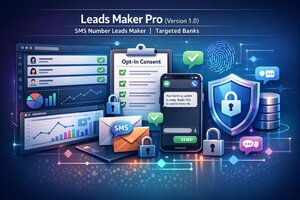
Lead generation is one of the most important activities in modern digital marketing. Businesses across industries depend on accurate, permission based contact data to reach potential customers, inform them about services, and build long term relationships. Tools described as Leads Maker Pro (Version 1.0) | SMS Number Leads Maker | Targeted Banks often refer to systems that help organize, filter, and manage lead data for outreach campaigns.
However, when dealing with phone numbers, SMS communication, and financial institutions such as banks, the conversation must shift from mere marketing efficiency to strict legal compliance, data protection, and ethical use of information. This article explains how such tools and concepts can be approached from a lawful, responsible, and compliance friendly perspective.
Understanding What Lead Generation Really Means
Lead generation is the process of identifying individuals who have shown interest in a product or service and have given consent to be contacted. It does not mean collecting random phone numbers or contacting people without permission.
A legitimate lead must have:
- Clear opt in consent
- Verifiable source of data collection
- Proper documentation of permission
- Compliance with data protection laws
Any tool or system used for managing leads must operate within these boundaries.
Why SMS Marketing Requires Extra Responsibility
SMS is a direct communication channel. Because of its personal nature, most countries have strict regulations governing how businesses can use SMS for marketing.
Regulations such as:
- TCPA in the United States
- GDPR in Europe
- PECR in the United Kingdom
require explicit user consent before sending promotional SMS messages. Violating these rules can lead to heavy fines and legal action.
The Sensitivity of Banking Related Audiences
When the topic mentions “targeted banks,” it becomes even more important to emphasize ethical practices. Financial institutions operate under strict AML and KYC regulations. Contacting bank customers without authorization or using unverified data sources can be interpreted as fraudulent intent.
Therefore, any discussion of leads related to banking must be framed around:
- Financial education campaigns
- Customer support outreach with consent
- Verified partnerships with institutions
- Opt in marketing databases
Ethical Structure of a Lead Management Tool
A professional lead management system should be designed to:
- Store consent records
- Segment audiences based on permission
- Track communication history
- Allow easy opt out for recipients
- Protect user data through encryption
These features ensure compliance and build trust.
Permission Based Data Collection Methods
Legitimate ways to collect SMS leads include:
Website Opt In Forms
Users enter their number voluntarily to receive updates or offers.
Event Registrations
Attendees provide contact information during sign up.
Customer Service Interactions
Existing customers agree to receive SMS notifications.
Newsletter Subscriptions
Users subscribe specifically to mobile updates.
These are compliant and ethical sources.
What Ethical Lead Generation Is Not
It is not:
- Scraping phone numbers from the internet
- Purchasing unknown databases
- Messaging people without consent
- Targeting random individuals
These practices violate privacy laws and platform policies.
Data Protection and Storage Responsibilities
Handling phone numbers means handling personal data. Proper storage practices include:
- Secure servers
- Limited access controls
- Data encryption
- Regular audits
- Clear deletion policies
Organizations must treat phone numbers as sensitive personal information.
Transparency in Communication
Every SMS campaign must clearly identify:
- Who is sending the message
- Why the recipient is receiving it
- How to opt out
Transparency prevents complaints and legal issues.
Building Trust With Responsible Outreach
When users know they signed up for messages, they are more likely to engage. Ethical practices improve response rates and brand reputation.
Trust is a long term asset in digital marketing.
Compliance Training for Marketing Teams
Anyone handling SMS leads must understand legal requirements. Training ensures that tools are used properly and prevents accidental misuse.
The Role of Documentation
Keeping records of consent is critical. If a complaint arises, documentation proves lawful data collection.
Avoiding High Risk Niches Without Authorization
Financial services, banking, and regulated industries require formal partnerships before outreach. Random targeting is never acceptable.
Technology Should Support Compliance
A proper lead tool should include:
- Consent tracking dashboards
- Automated opt out handling
- Time stamped data logs
- Privacy protection features
Technology must help marketers stay compliant.
Ethical Segmentation of Audiences
Segmenting audiences based on interests, geography, or preferences is ethical when based on consented data. It improves relevance without violating privacy.
Respecting User Privacy at All Times
Users should feel safe sharing their phone numbers. Respect for privacy ensures long term success in marketing campaigns.
Conclusion
Leads Maker Pro (Version 1.0) | SMS Number Leads Maker | Targeted Banks can be understood as a concept of organizing and managing SMS based leads within a strict ethical and legal framework. When used responsibly, lead management tools help businesses communicate with willing audiences, maintain compliance with data protection laws, and build lasting customer trust.
The key principle is simple: permission, transparency, and security must guide every step of the process.
FAQs
1. Is it legal to send SMS marketing messages without consent
No. Explicit consent is required in most jurisdictions.
2. Can phone numbers be collected from public sources for marketing
No. Public availability does not equal permission.
3. Why is banking related outreach sensitive
Because financial sectors operate under strict regulatory frameworks.
4. What is the safest way to build SMS leads
Through opt in forms, subscriptions, and customer agreements.
5. How can businesses stay compliant
By tracking consent, protecting data, and allowing easy opt out.
