
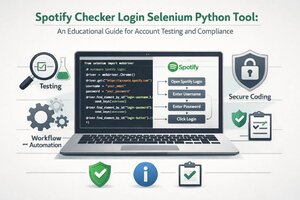
Automation tools have become an important part of modern software testing, quality assurance, and security research. One topic that often generates discussion in developer and compliance circles is the Spotify Checker Login Selenium Python Tool. When approached responsibly, this type of tool can be used for educational purposes such as learning browser automation, understanding login flows, and testing account security in controlled and lawful environments.
This guide explains the concept from a professional and ethical perspective. It focuses on how Selenium and Python are commonly used for login testing, what responsible usage looks like, and how developers can stay aligned with platform rules, privacy standards, and legal boundaries.
Understanding Login Automation in Modern Web Applications
Login automation is a common practice in software testing. Developers and QA teams automate login flows to ensure that authentication systems work correctly across browsers, devices, and updates. These tests help identify bugs, performance issues, and usability problems before users are affected.For platforms like Spotify, login systems are complex. They include security checks, rate limits, device verification, and fraud prevention mechanisms. Studying these flows in a controlled environment helps developers understand how secure authentication is designed.
What Is Selenium and Why Developers Use It
Selenium is an open source browser automation framework widely used in testing and educational projects. It allows scripts to control browsers such as Chrome, Firefox, and Edge in a way that simulates real user interactions.Developers use Selenium to:
- Test login and signup flows
- Validate form behavior
- Ensure cross browser compatibility
- Learn how web automation works in practice
The Role of Python in Automation Testing
Python is a popular programming language for automation due to its readability and large ecosystem. In testing environments, Python scripts can:- Launch browsers
- Navigate web pages
- Input credentials from test data
- Capture responses and error messages
Responsible Interpretation of a Spotify Checker Login Tool
The phrase “Spotify checker” can be misunderstood if taken out of context. From a compliance perspective, a checker should only be used for:- Testing accounts you own
- Validating login behavior in sandbox environments
- Learning how Selenium handles authentication pages
Legal and Ethical Considerations
Respect Platform Terms of Service
Most online platforms clearly define how their services can be accessed. Automated login attempts outside approved use cases can violate terms of service. Developers must read and understand these rules before building or running any automation scripts.Data Privacy and Consent
Login credentials are sensitive personal data. Any testing activity must ensure:- Credentials belong to you or a test account
- Data is stored securely
- No personal information is shared or logged improperly
Educational and Testing Scope Only
A Selenium Python login tool should be framed as a learning or QA exercise. Using it for bulk checking, scraping, or probing third party accounts is not acceptable.How Selenium Login Testing Works in Practice
In a legitimate testing environment, a Selenium script typically:- Opens a browser session
- Navigates to the login page
- Locates username and password fields
- Submits test credentials
- Observes the response such as success, error, or challenge
Common Challenges in Login Automation
CAPTCHA and Bot Detection
Modern platforms use CAPTCHA and bot detection to prevent abuse. Selenium tests may trigger these protections, which is expected behavior. Testers should not attempt to bypass these systems.Multi Factor Authentication
Many services require additional verification steps. Automation scripts must account for these or exclude such flows from automated testing.Rate Limiting
Repeated login attempts can trigger rate limits. Ethical testing respects these limits and avoids excessive requests.Learning Value for Developers
Studying a Spotify style login flow using Selenium and Python offers valuable lessons:- How modern authentication systems are structured
- How browsers handle cookies and sessions
- How security measures protect user accounts
Security Awareness and Defensive Learning
Understanding how login automation works also helps developers think defensively. By seeing how automated tools interact with login pages, teams can better design systems that resist abuse.This defensive mindset is essential for secure software development.
Safe Testing Environment Setup
Developers should always:- Use test accounts created for automation
- Run scripts on local or private systems
- Avoid public networks when handling credentials
Compliance Focus in Automation Education
Responsible education emphasizes:- Transparency in intent
- Respect for user data
- Alignment with platform rules
Why Educational Context Matters
Search terms can sometimes sound misleading, but intent defines value. When framed correctly, a Spotify Checker Login Selenium Python Tool becomes a learning resource rather than a misuse guide.Clear explanations and ethical framing protect both readers and platforms.
Conclusion
The Spotify Checker Login Selenium Python Tool should be understood as an educational concept centered on browser automation, login testing, and security awareness. When used responsibly, Selenium and Python help developers learn how authentication systems work and how to design more secure applications.Staying within legal and ethical boundaries is essential. Automation should always respect ownership, consent, and platform policies. With the right mindset, these tools contribute positively to learning, testing, and software quality.
FAQs
1. Is a Spotify login checker legal to useIt is only legal when used on accounts you own or in approved test environments with permission.
2. Why do platforms block automated logins
Automation can be abused. Blocking protects users from fraud and unauthorized access.
3. Can Selenium be used for learning purposes
Yes. Selenium is widely used in education and QA training.
4. Should developers bypass CAPTCHA or security checks
No. Bypassing security systems is unethical and may be illegal.
5. What is the main benefit of learning login automation
It helps developers understand authentication flows and build more secure systems.
