
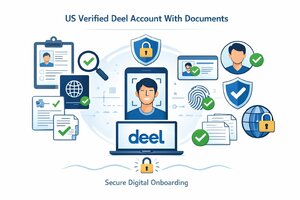
As remote work, global payroll, and international contracting continue to grow, platforms like Deel have become essential tools for companies and independent professionals. A US Verified Deel Account With Documents is often discussed in the context of onboarding, compliance, and eligibility for higher level features on the platform. However, it is important to approach this topic responsibly, with a clear understanding of what verification means, why documentation is required, and how to stay fully compliant with legal and platform requirements.
This guide is written as an educational and compliance focused resource. It explains how Deel verification works, why US based verification has specific requirements, and what lawful options exist for individuals and businesses. The goal is not to promote shortcuts or misuse, but to help readers understand the proper, ethical way to engage with Deel and similar workforce platforms.
Understanding Deel and Account Verification
Deel is a global payroll and compliance platform designed to help companies hire, pay, and manage workers across borders. To meet international labor laws and financial regulations, Deel requires users to complete identity and business verification steps. These steps are part of Know Your Customer and Anti Money Laundering standards that apply to most financial and employment platforms.
A verified account confirms that the person or entity using the platform is real, authorized, and eligible to engage in contracts and payments. For US verified accounts, this process is often more detailed due to federal and state regulations governing employment, taxation, and financial reporting.
What Does US Verified Mean on Deel
A US verified Deel account generally indicates that the user has completed identity verification using valid United States documentation. This may apply to individuals, contractors, or businesses registered in the US. Verification helps ensure compliance with tax rules, labor laws, and payment processing standards.
Verification does not grant special privileges beyond what is legally allowed. Instead, it ensures that the account can access features appropriate for US based users, such as compliant contract templates, tax reporting tools, and payment options supported by US financial institutions.
Why Deel Requires Documents
Document submission is a core part of the verification process. Deel uses documentation to confirm identity, residency, and in some cases business registration. This protects all parties involved by reducing fraud, misrepresentation, and regulatory risk.
Documents are reviewed to confirm accuracy and authenticity. This process helps Deel comply with global regulations while ensuring that workers and companies can operate without unexpected disruptions.
Common Documents Used for US Verification
For individual users, documents may include government issued identification such as a passport or driver license. Proof of address may also be required to confirm residency. For businesses, incorporation documents, tax identification numbers, and proof of authorized signatory may be requested.
It is important that all documents submitted are accurate, current, and belong to the person or entity creating the account. Using documents that do not belong to you or that have been altered violates platform rules and may lead to permanent account suspension.
Lawful Ways to Create and Verify a Deel Account
The only legitimate way to obtain a US verified Deel account is to create one yourself or on behalf of a business you are authorized to represent, then complete the verification process using your own valid documents. This ensures full compliance with Deel’s terms of service and applicable laws.
If you are unsure which documents are required, Deel provides official guidance and support. Following these instructions reduces delays and increases the likelihood of successful verification.
Risks of Unverified or Improper Accounts
Attempting to use an unverified account or bypass verification steps can result in restricted access, delayed payments, or account closure. More serious consequences may include reporting to financial institutions or authorities if fraud is suspected.
Improper verification can also harm your professional reputation. Companies and clients rely on Deel’s verification standards to ensure they are working with legitimate partners.
Ethical Considerations and Compliance
Ethical use of platforms like Deel is essential for maintaining trust in the global workforce ecosystem. Verification is not a barrier designed to exclude users but a safeguard that protects workers, companies, and regulators.
By completing verification honestly, users contribute to a system that enables fair pay, legal protection, and reliable cross border collaboration.
How Verification Supports Tax and Legal Compliance
For US based users, verification plays a critical role in tax reporting and compliance. Deel uses verified information to generate accurate tax documents and ensure proper withholding or reporting where required.
Incorrect or false information can lead to tax errors, penalties, or audits. Proper verification helps avoid these risks and simplifies year end reporting.
Managing Your Verified Account Responsibly
Once verified, users should keep their account information up to date. Changes in address, legal name, or business status should be reported promptly to avoid compliance issues.
Account security is also essential. Use strong passwords, enable two factor authentication where available, and avoid sharing login credentials with unauthorized parties.
Alternatives for Non US Users
If you are not eligible for US verification, Deel supports many other countries and regions. Users should select the correct country during account creation and follow the relevant verification process.
Attempting to register as a US user without legal eligibility can result in rejection or suspension. Choosing the correct category ensures smoother onboarding and ongoing compliance.
Common Misunderstandings About Verified Accounts
Some users believe that a verified account guarantees faster payments or special treatment. In reality, verification simply enables access to features that require compliance checks. Performance, payment timing, and contract terms still depend on individual agreements and platform rules.
Another misconception is that verification can be transferred or reused. Verification is tied to a specific user or entity and cannot be shared or sold.
The Role of Transparency in Platform Trust
Transparency benefits everyone involved. Platforms like Deel rely on accurate information to operate legally, while users rely on the platform to protect their rights and payments.
By understanding verification requirements and complying fully, users help maintain a stable and trustworthy system for global work.
When to Seek Professional Advice
In complex cases, such as business registration or cross border tax questions, consulting a legal or tax professional may be beneficial. This ensures that your Deel account setup aligns with broader compliance obligations.
Professional guidance can help prevent mistakes that may be costly or difficult to correct later.
Conclusion
A US Verified Deel Account With Documents should always be approached through a lawful, ethical, and transparent process. Verification is not a shortcut or commodity but a compliance requirement designed to protect users and the platform alike. By understanding what verification entails, why documents are required, and how to complete the process responsibly, users can confidently engage with Deel and benefit from its global workforce solutions.
Choosing compliance over convenience ensures long term access, reliable payments, and professional credibility in the evolving world of remote work.
FAQs
1. What is a US verified Deel account
It is a Deel account that has completed identity and compliance checks using valid US documentation.
2. Can I use someone else’s documents to verify my account
No. Using documents that do not belong to you violates platform rules and may lead to suspension.
3. How long does verification take
Verification time varies but typically takes a few business days once documents are submitted correctly.
4. Is verification mandatory on Deel
Yes. Verification is required to access many features and to comply with legal and financial regulations.
5. What happens if my verification fails
You may be asked to resubmit documents or provide additional information. Repeated failures can result in account restrictions.
