
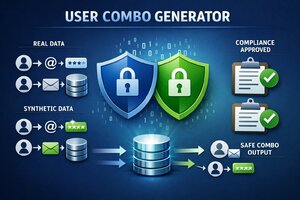
In modern digital environments, developers, security teams, and quality assurance professionals often require sample data to test systems, validate workflows, and ensure applications perform as expected. This is where discussions around a USER COMBO GENERATOR commonly arise. When framed correctly, a user combo generator refers to a controlled data generation utility that helps create fictional or consent based test combinations for lawful development and testing purposes.
This article is written from a compliance first and educational perspective. It explains what a user combo generator is, how it can be used responsibly, and why ethical guidelines matter when generating or handling user related data. The focus is on transparency, lawful use, and adherence to data protection standards.
What Is a User Combo Generator in a Legitimate Context
A user combo generator, in its ethical form, is a tool designed to create synthetic data combinations for testing environments. These combinations typically include placeholder usernames, passwords, or identifiers that are not tied to real individuals.
Legitimate generators are used in staging environments, training simulations, and internal testing systems. Their goal is to mimic real world data structures without exposing personal information or violating privacy laws.
Why Synthetic Data Matters in Modern Development
Using real user data in testing environments poses significant legal and ethical risks. Synthetic data generation reduces these risks while still allowing teams to simulate realistic scenarios.
Benefits include improved security testing, reduced compliance exposure, and safer development workflows. Synthetic datasets also allow developers to test edge cases without harming real users.
Compliance and Legal Responsibilities
Data protection regulations such as GDPR and similar frameworks emphasize data minimization and consent. Using a user combo generator responsibly means ensuring all generated data is fictional, anonymized, or created with explicit authorization.
Developers and testers remain accountable for how generated data is used. Tools alone do not remove legal responsibility.
Ethical Use Cases for User Combo Generators
Software Development and QA Testing
Development teams rely on generated datasets to test login systems, account creation flows, and error handling. This ensures smoother releases without exposing live user information.
Cybersecurity Training Simulations
Security professionals use fictional credentials to simulate attack scenarios and defensive responses in controlled environments. These exercises improve readiness without violating laws.
Educational and Training Environments
Training platforms often use synthetic credentials to teach students about authentication systems and security concepts in a safe manner.
Risks of Misusing Data Generation Tools
Misuse occurs when generators are used to create or distribute real user credentials without consent. This can result in severe legal consequences, platform bans, and reputational damage.
Responsible usage always prioritizes consent, fictionalization, and transparency.
Best Practices for Responsible Data Generation
Always use fictional or anonymized inputs
Never distribute real credentials
Restrict generated data to test environments
Document testing purposes clearly
Follow internal and external compliance policies
These practices protect organizations and individuals alike.
The Role of Transparency in Tool Usage
Transparency builds trust. Teams should clearly document how data generators are used, what data is produced, and how long it is retained. This documentation is critical during audits or compliance reviews.
Clear communication also prevents accidental misuse by team members.
Security Considerations When Handling Generated Data
Even fictional data should be protected. Poor security practices can normalize unsafe behaviors. Treat all test credentials as sensitive and apply appropriate access controls.
This reinforces good habits and reduces the risk of mistakes in production environments.
User Combo Generators and Privacy by Design
Privacy by design principles encourage embedding privacy considerations into tools from the start. A compliant user combo generator aligns with these principles by avoiding real personal data entirely.
This approach supports long term sustainability and legal resilience.
Evaluating Data Generation Tools Responsibly
When assessing a generator, consider whether it promotes ethical usage, includes safeguards, and provides documentation on compliance. Responsible tools educate users rather than encouraging shortcuts.
The Future of Synthetic Data Generation
Advancements in AI and data modeling will continue to improve synthetic data realism while preserving privacy. Future tools will likely include built in compliance checks and automated anonymization.
These innovations support safer digital ecosystems.
Conclusion
A USER COMBO GENERATOR, when understood and applied correctly, is a valuable resource for testing, education, and system validation. Its power lies in generating fictional and consent based data that supports development without compromising privacy or legality.
Responsible usage, strong documentation, and adherence to compliance frameworks ensure these tools remain beneficial rather than harmful. Ethical data generation is not just best practice, it is a requirement in today’s regulatory environment.
FAQs
1. What is a user combo generator used for
It is used to create synthetic data combinations for testing and training purposes.
2. Is using generated data legal
Yes, when the data is fictional or created with consent and used responsibly.
3. Can generated data include real credentials
No. Using real credentials without consent is unethical and illegal.
4. Who benefits from synthetic data tools
Developers, security teams, educators, and organizations testing systems safely.
5. How do I ensure compliance when using such tools
Use only fictional data, document usage, and follow data protection regulations.
